
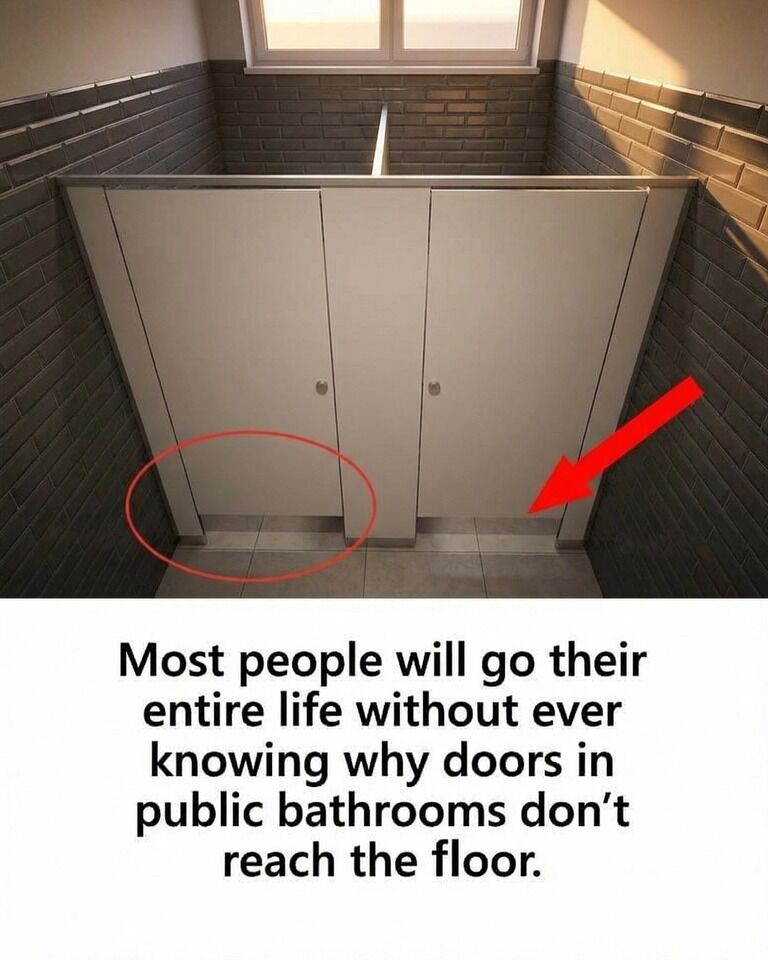
You Probably Don’t Know This: Why Public Restroom Doors Don’t Reach the Floor
Trending Keywords: why bathroom stall doors have gaps, public restroom design explained, bathroom stall gap reason, public toilet privacy debate, restroom safety design, commercial bathroom construction facts
You Probably Don’t Know This: Why Public Restroom Doors Don’t Reach the Floor
Have you ever wondered why public restroom stall doors never reach the floor? It is something we see almost every day, yet most people never stop to question it. The gap at the bottom — and sometimes along the sides — may seem strange or even uncomfortable. However, this design choice is intentional and based on several practical reasons.
Let us explore the real explanations behind this common architectural decision.
1. Safety and Emergency Access
One of the main reasons for the floor gap is safety. In case of a medical emergency, such as fainting or a health crisis, staff or emergency responders can quickly see that someone needs help. The gap allows them to assess the situation and even unlock or access the stall more easily if necessary.
This feature can be crucial in crowded public spaces like malls, airports, and schools.
2. Faster Cleaning and Maintenance
Public restrooms require frequent cleaning. The open space beneath the doors allows custodial staff to clean the floors more efficiently without opening each stall individually.
Mops, hoses, and cleaning equipment can move freely under the partitions, saving time and reducing labor costs.
3. Cost Efficiency
Full-length doors and enclosed stalls require more materials, heavier hardware, and more complex installation. Leaving space at the bottom reduces material use and lowers construction costs.
In large commercial buildings with many stalls, these savings become significant.
4. Better Air Circulation
Ventilation is very important in public restrooms. The gap improves airflow, helping reduce odors and moisture buildup. Better air circulation also helps prevent mold growth and keeps the space more hygienic.
5. Discouraging Misuse
The visible gap can discourage inappropriate behavior. Because it is easier to detect if a stall is occupied for an unusually long time, it can help prevent vandalism, smoking, or other misuse.
6. Easier to See Availability
