
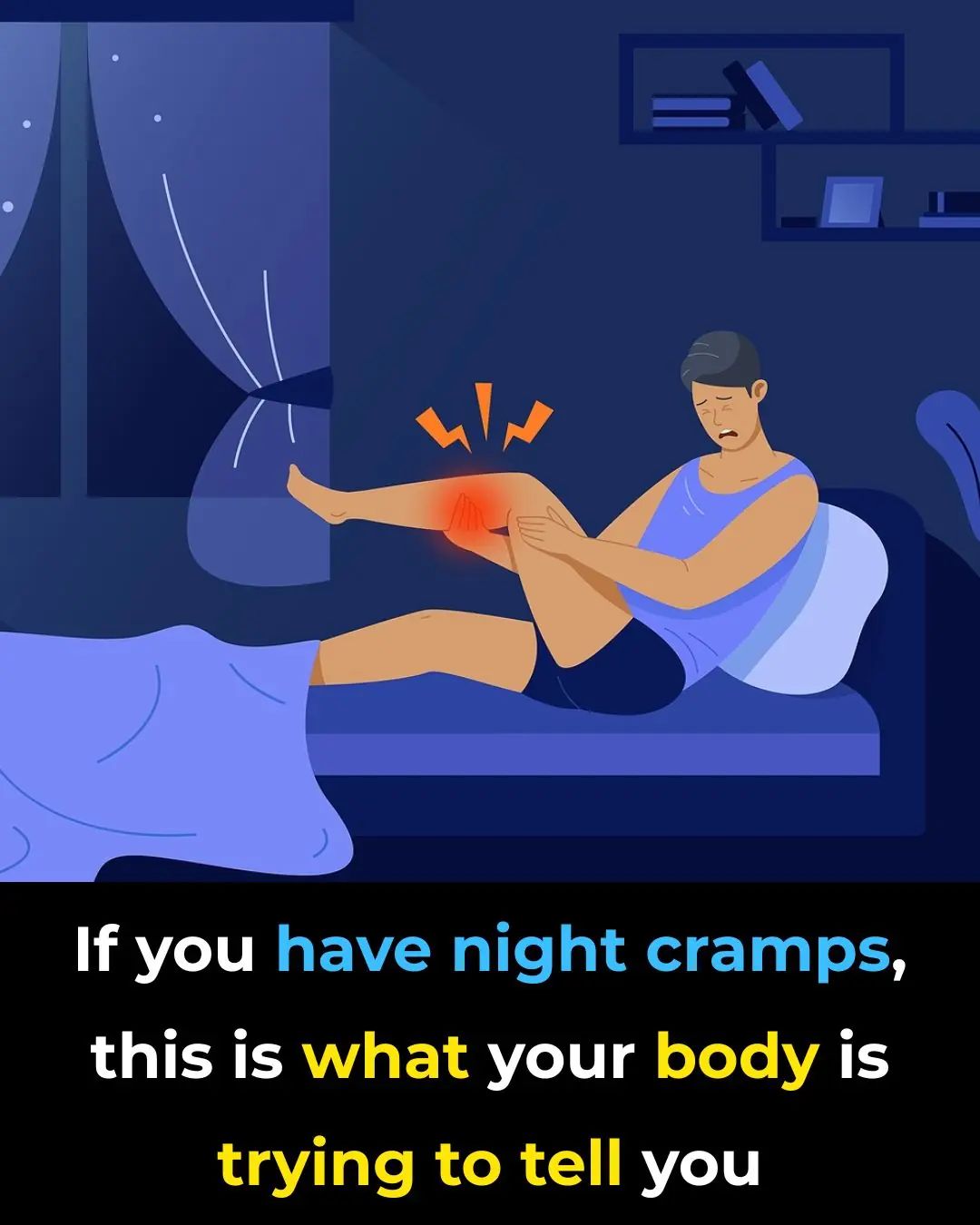
6. Certain Medications
Some medications, including diuretics and certain blood pressure drugs, can affect mineral balance and increase the risk of cramps.
Your body may be reacting to:
-
Changes in fluid levels.
-
Altered electrolyte balance.
Never stop medication on your own, but speak to your healthcare provider if cramps become frequent.
When Should You Be Concerned?
Occasional night cramps are common and usually not dangerous. However, you should consult a doctor if:
-
Cramps happen very frequently.
-
They are extremely painful or last a long time.
-
You notice swelling, redness, or weakness in the leg.
-
They interfere significantly with your sleep.
Gentle Ways to Relieve a Night Cramp
If a cramp happens:
-
Stretch the affected muscle slowly.
-
Flex your foot upward toward your knee.
-
Massage the area gently.
-
Apply warmth to relax the muscle.
Final Thoughts
Night cramps are often a simple signal from your body asking for hydration, better nutrition, gentle movement, or rest. In most cases, small lifestyle adjustments can greatly reduce their frequency.
