
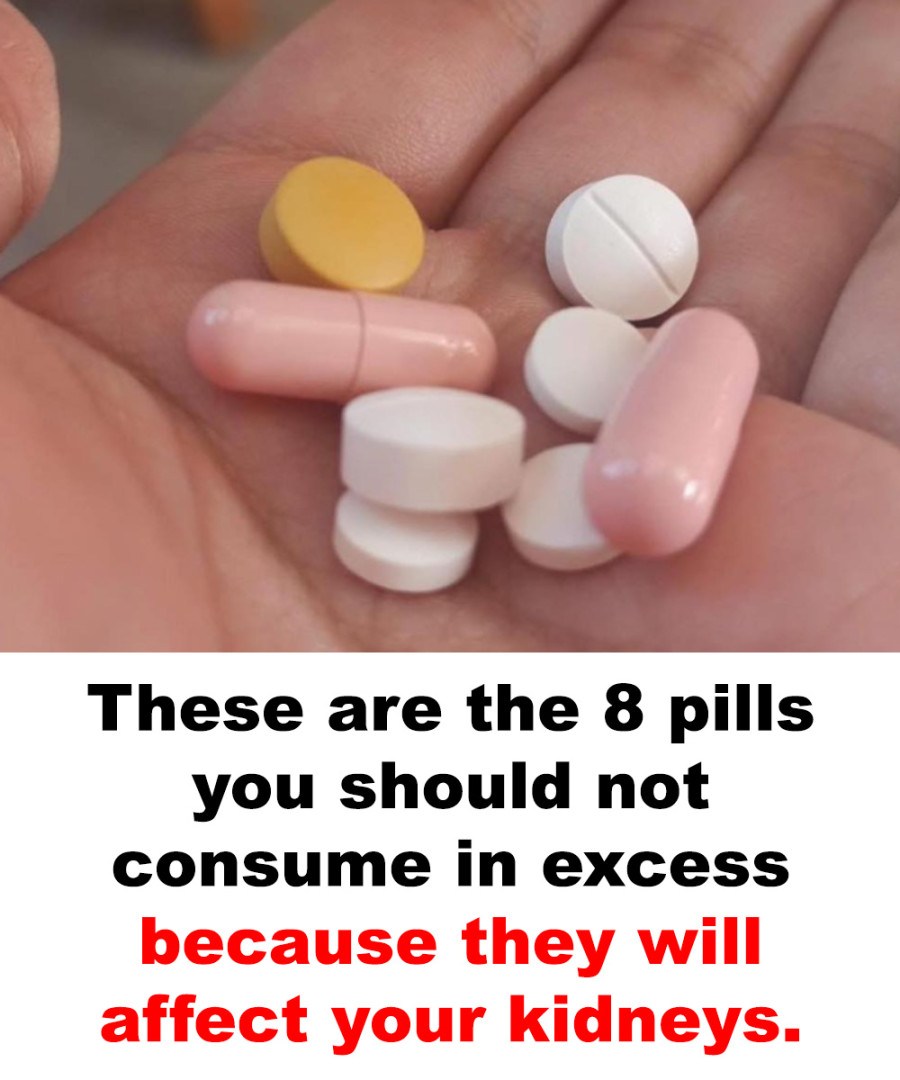
Eight Pills That Can Harm Your Kidneys — Many People Take Them Without Knowing
Your kidneys play a vital role in filtering waste, balancing fluids, and keeping your body healthy. Yet many commonly used medications can damage the kidneys if taken frequently, incorrectly, or without medical supervision.
Below are eight types of pills known to negatively affect kidney health, especially when misused or taken long‑term.
1. Painkillers (NSAIDs)
Examples: Ibuprofen, Naproxen, Diclofenac
These are among the most common causes of drug‑related kidney damage.
-
Reduce blood flow to the kidneys
-
Long-term or high-dose use can lead to chronic kidney disease
-
Risk increases with dehydration or old age
2. Certain Antibiotics
Examples: Gentamicin, Vancomycin, Amphotericin B
Some antibiotics are toxic to kidney tissue if not properly dosed.
-
Can cause acute kidney injury
-
Risk is higher in elderly patients or those with existing kidney problems
3. Acid Reflux Medications (PPIs)
Examples: Omeprazole, Pantoprazole, Esomeprazole
When used for months or years:
-
Linked to chronic kidney disease
-
Can cause inflammation inside kidney structures
4. Diuretics (Water Pills)
Examples: Furosemide, Hydrochlorothiazide
While helpful for heart and blood pressure conditions:
-
Overuse can cause severe dehydration
-
Leads to electrolyte imbalance and kidney stress
5. Blood Pressure Medications (Improper Use)
Examples: ACE inhibitors, ARBs (when misused)
These drugs are generally kidney‑protective when used correctly, but:
-
Incorrect dosing can worsen kidney function
-
Dangerous when combined with dehydration or NSAIDs
6. Laxatives (Chronic Use)
Especially stimulant laxatives
-
Cause dehydration
-
Disrupt electrolyte balance
-
Long‑term use can weaken kidney function
7. Lithium (Mood Stabilizer)
Used for bipolar disorder:
-
Can damage kidneys after long‑term use
-
Requires regular blood and kidney tests
-
Risk increases without proper monitoring
8. Herbal Pills and Supplements
Especially unregulated or “detox” products
-
Many contain hidden toxins or heavy metals
-
Some herbs directly damage kidney tissue
-
“Natural” does not always mean safe
Warning Signs of Kidney Damage
