
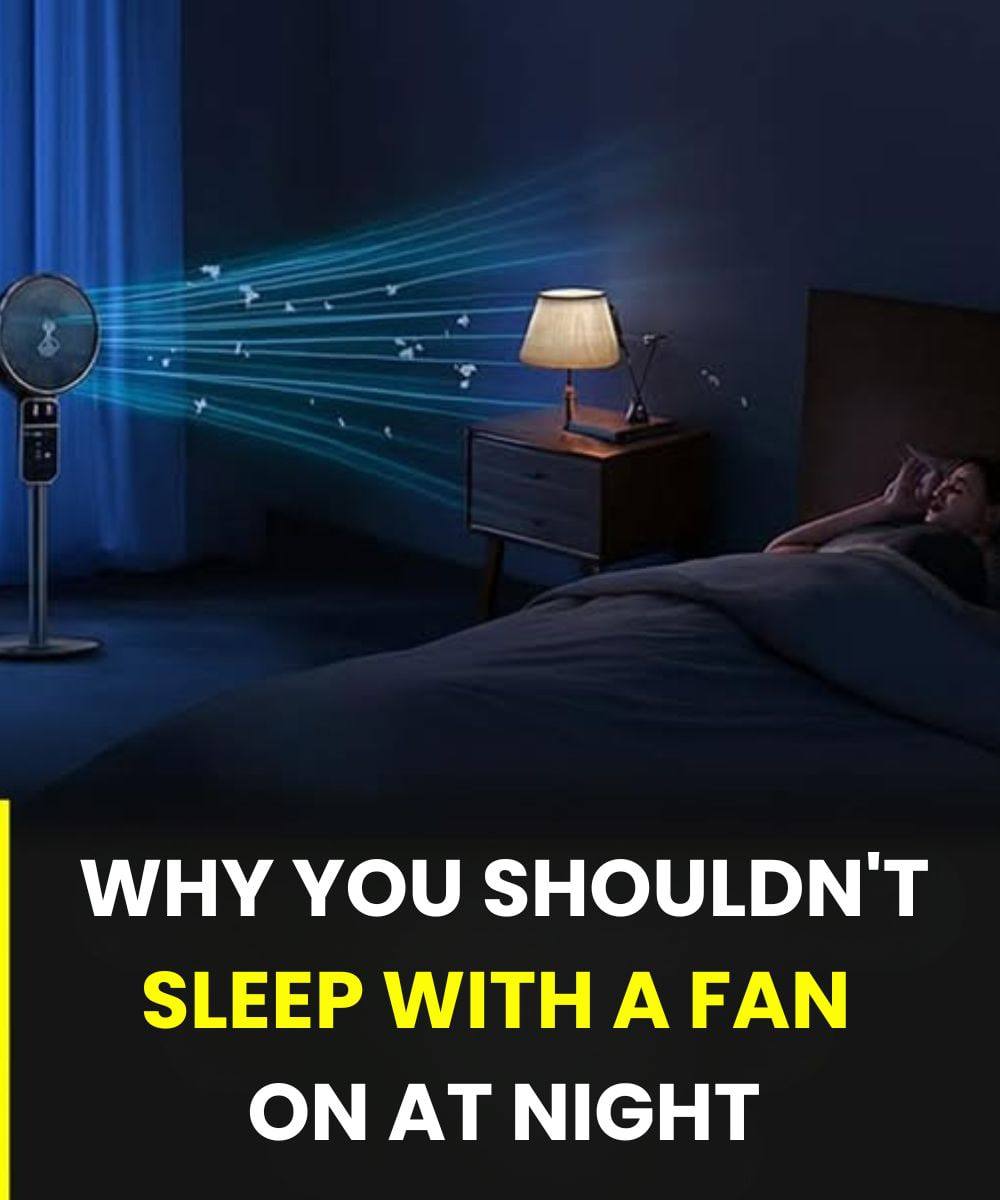
If you sleep for seven or eight hours but still wake up feeling unrested, the fan may be subtly disrupting your sleep cycle. While the noise and airflow can feel comforting at first, they may prevent your body from reaching deeper, more restorative stages of sleep.
Small temperature drops throughout the night or constant airflow on the skin can trigger micro-awakenings—brief interruptions you don’t remember but that reduce sleep quality. Over time, this can lead to morning fatigue, brain fog, or low energy during the day.
5. You Notice Dry Skin or Irritated Eyes
Fans can accelerate moisture loss from the skin and eyes, especially in dry climates or air-conditioned rooms. If you frequently wake up with:
- Tight, dry, or itchy skin
- Red, irritated, or burning eyes
- A sensation of grit or discomfort in the eyes
- your body may be reacting to prolonged air exposure during sleep. People with sensitive skin, eczema, or dry-eye syndrome are particularly affected.
What You Can Do Instead

If you recognize several of these signs, you don’t necessarily need to stop using a fan altogether. Instead, consider:
- Pointing the fan away from your body
- Using a timer so it turns off after you fall asleep
- Keeping the room well ventilated during the day
- Cleaning the fan blades and room regularly
- Listening to your body is key. What feels comfortable in the moment may not always support deep, restorative rest.
Final Thought
Sleeping with a fan on isn’t harmful for everyone—but it’s not ideal for everyone either. If your body is giving you repeated signals of discomfort, dryness, or fatigue, it may be time to adjust your sleep environment. Quality sleep isn’t just about falling asleep fast—it’s about waking up truly restored.
